Where strategy stalls, and how it gets moving again.
Documented Signal Day engagements, and a weekly briefing on the patterns that keep showing up across them.
Executive insights


Case studies
Weekly insights for leaders who have to make strategy land.
Met Gala Wears Prada: Who Owns Culture Now?
The Met Gala conversation has moved quickly from what people wear to who shapes the room. That shift is familiar if you step back from the moment. We have been here before. For centuries, culture has been negotiated at the intersection of art and money, beauty and patronage, elites who define taste and a broader public that accepts, resists, or redefines it.
When Jeff Bezos and Lauren Sanchez Bezos stepped in as lead sponsors and honorary chairs, it was described as philanthropy. In historical terms, it is patronage. From the Medici to modern foundations, those who finance cultural institutions influence what is presented, preserved, and elevated. The mechanism changes. The dynamic does not.
At the same moment, The Devil Wears Prada 2 opened to a $80 million domestic and $235 million worldwide weekend, supported by more than half a billion in social reach. While those numbers matter, the underlying signal matters more. Audiences did not show up because something new arrived. They showed up because something familiar returned with clarity.
The 2006 The Devil Wears Prada was a precise study of how taste becomes power. Meryl Streep embodied the figure who decides what is in and what is out, and by extension, who is seen and who is not. That character resonated because it reflected a structure people recognize, whether they are inside it or navigating around it.
Here historical tension arises again. Many people use the language of ‘high art’ and ‘low art’ as if it describes quality. It does not. It describes position. It reflects a judgment about whose taste is authorized and whose is dismissed. The term itself carries the imprint of those who have had the power to define it. Across time, the so-called low becomes high when institutions adopt it, and what is labeled high can lose relevance when it no longer connects to lived experience.
What we see this week is that dynamic in motion. On one side, you have institutional influence shaping the frame. Capital, access, and legacy organizations determining how culture is presented and who participates in that presentation. On the other side, you have audience response driven by recognition, memory, and emotional alignment. People are not waiting to be told what matters. They are signaling it through attention, conversation, and participation.
Even though these forces are not new, what is new is their visibility and speed.
The success of The Devil Wears Prada 2 illustrates that audiences are not passive recipients of taste. They are active participants in defining it. The film is performing well not only because of its cast or its marketing, but because it connects to a shared understanding that has persisted over time. That is a form of cultural authority that does not originate in institutions, even if it is amplified by them.
At the same time, the Met Gala demonstrates that institutions still play a central role in shaping context. They determine which expressions are elevated, how they are framed, and who has access to that stage. Patronage has always carried this dual function. It supports art and it influences its presentation.
The Devil Wears Prada 2 is a wonderful film (I highly recommend it) in part because it is so of-the-moment; its inciting incident is the crisis of legit journalism today. The film begins with a major print journalism team winning an award for their reporting while simultaneously being downsized and fired – by text. Quite the echo of the recent gutting of the journalism staff Washington Post, which, full circle to the Met Gala, is owned by Jeff Bezos.
Ladies and gentlemen of the jury, I present you with Exhibit A in the ongoing negotiation between art and money, between the structures that enable visibility and the communities that generate meaning. For creators, founders, and leaders, this is not an abstract debate. It is the system in which your work will live.
Quality alone does not determine impact. Context does. Where your work appears, who associates with it, and how it is framed all influence how it is received. At the same time, alignment with an audience that finds meaning in what you do is what allows it to sustain attention over time.
This is why the language of high and low is less useful than understanding how taste moves. Culture is not static. It is continually redefined through interaction between institutions and audiences. Each side influences the other. Neither has complete control.
A major cultural event shows how power shapes the frame. A major film shows how audiences validate meaning. Together, they remind us that culture is not owned in a simple way. It is contested, negotiated, and renewed through the interaction of these forces.
How do you perceive the ways culture is shaped? Where do you choose to locate your own work within that system?

The Bachelorette and the System Behind its Cancellation
The sudden decision by Disney, ABC, and Hulu to pull a fully produced season of The Bachelorette just days before its scheduled premiere goes beyond entertainment headlines. It reveals the system by which creative industries actually function. It is also a reminder that creative careers are shaped not only by talent and opportunity, but by systems, institutional trust, and personal comportment.
Before going further, it is important to acknowledge the seriousness of the context surrounding this article. Acts and allegations of violence inside families are painful and consequential. They are not plot points or marketing angles, although tabloid media treat them as such. They are human realities that affect lives and communities. Any thoughtful conversation about the entertainment industry must begin with respect for that gravity.
What makes this moment worth examining is the scale of the decision. Networks do not cancel completed seasons casually. Franchise reality programs can cost two million dollars per episode to produce. Once marketing campaigns, advertising commitments, and global distribution plans are included, shelving a season represents tens of millions of dollars in lost value. When executives accept that level of loss, they are signaling that something more important than short term revenue is at stake. They are protecting institutional trust.
Large media organizations operate as long arc credibility systems. Their brands are built over decades through relationships with audiences, advertisers, investors, talent, and creative partners. When reputational risk rises, leadership teams must weigh immediate financial outcomes against long term confidence in the institution. These decisions are rarely about a single individual or a single project. They are about maintaining the conditions that allow future projects to succeed. I was an executive at both Disney and National Geographic, both platinum brands, and I have been in these discussions first-hand.
Across film, television, and streaming we have seen completed projects shelved after mergers, release schedules rewritten in response to public pressure, and marketing campaigns halted mid launch. Creative work exists inside complex ecosystems where legal exposure, brand perception, and corporate strategy can change outcomes overnight. While talent and craft remain essential, they are not the only forces shaping what reaches audiences.
For creators and entrepreneurs,here is the deeper lesson. Creative careers are built within systems that reward not only visibility, but also reliability and judgment. Audiences form emotional relationships with the people behind the work. Over time they begin to see character and conduct as extensions of creative identity. I’m not moralizing. I am reflecting on how culture processes trust.
In my own life I have tried to build work not only through projects, as well as through the example of how I move in the world. Creative freedom carries responsibility. The choices we make under pressure, the way we treat collaborators, and the way we respond to setbacks all shape how institutions and audiences perceive us. Reputation accumulates gradually. It can also be damaged quickly.
Reality television adds another layer to this conversation. Many viewers assume these programs simply document spontaneous behavior. In practice, casting processes involve psychologists and behavioral consultants who evaluate which participants are most likely to generate emotional intensity or unpredictable reactions. From a production standpoint, this creates so-called “compelling storytelling.” From an ethical standpoint, it raises questions about how vulnerability is used within attention-driven business models.
Entertainment companies operate on this powerful equation: Emotional engagement leads to audience attention; audience attention leads to advertising revenue; revenue encourages further investment in high intensity formats. When controversy escalates beyond what brands can absorb, the system recalibrates. Ratings cycles, public sentiment, and institutional risk tolerance interact in ways that shape which stories are told and which are abandoned.
For creative professionals, the most sustainable response is systems literacy. Understanding the economic and reputational dynamics of an industry allows creators to make more resilient choices. Careers that depend on a single platform or a single opportunity remain exposed to forces outside individual control. Careers built on diversified output, long term audience relationships, and consistently responsible private and professional conduct have greater durability.
Moments like this also remind us that hundreds of people contribute to every project that never reaches the public. Crew members, editors, marketers, assistants, producers, and executives invest time and energy in work that may vanish because of strategic decisions. The romantic narrative of creative success often focuses on breakthroughs. The professional reality emphasizes persistence through disruption.
Storytelling holds immense cultural power. Film, television, music, and digital media shape how societies understand themselves. With that power comes a responsibility to recognize the human and institutional contexts in which creative work unfolds. As leaders in creative fields, we need to balance ambition with accountability, expression with awareness of the systems we inhabit.
In the end, longevity in creative life comes from aligning three elements over time: Craft, character, systems understanding. Talent may open doors. Visibility may accelerate momentum. Trust sustains the journey.
Bad Bunny’s Halftime Show and the Mechanics of Breakthrough: Five Principles of Unmistakable Creative Work
If you’ve been in the creative trenches for a while—producing a film, scaling a venture, leading a seminar, building a product—you’ve felt the Standard Playbook. Be careful. Sand down the rough edges. Confuse accessibility with neutrality. Become a chameleon so everyone is comfortable.
Then Bad Bunny walks onto the Super Bowl halftime stage—one of the most scrutinized, historically “safe” platforms in culture—and ignores the playbook. He doesn’t translate his lyrics. He doesn’t soften his cultural signals for the uninitiated. He stands in the center of the world and is fully himself.
And instead of shrinking the audience, the moment expands.
That’s the part worth studying carefully today.
I’ve seen this pattern across Disney, National Geographic, and independent production: culture does not move according to politeness or generality. Culture moves according to recognition. When something is unmistakable, we lean in. We share it because it carries a clear signal: this came from somewhere real.
If you want a breakthrough—creative, entrepreneurial, professional—there are mechanics beneath the aesthetics. Here are five you can use immediately.
Five Principles of Unmistakable Creative Work
First:
speak to your core audience, not “everyone.” The most common mistake I see, from first-time filmmakers to seasoned CEOs, is a sincere desire to include everyone. It sounds generous. It often feels responsible. In practice, it dissolves impact. When you design for a theoretical mass audience, you end up designing for no one.
Bad Bunny didn’t design for a “general viewer.” He designed for a specific cultural lineage and assumed familiarity rather than explaining himself. People don’t feel excluded; they feel oriented. They can tell where the work is coming from, and that sense of origin creates trust. Specificity doesn’t shrink the audience. It tells the audience where to stand.
When I was involved with March of the Penguins, the safe move would have been to turn it into a family-friendly comedy—celebrity voices, jokes, a layer of commentary to “help” the audience. We refused. We treated it as a quiet, observational film about endurance. We respected the integrity of the story, and that respect became the invitation.
Second:
authenticity lives in the details. Authenticity gets treated like a vibe or a caption. In reality, authenticity is a series of decisions—choices most people never notice consciously, but feel immediately. Bad Bunny’s performance was dense with lived context—rhythms, visual cues, movement styles that weren’t introduced or marketed. They were simply present. Authenticity reveals itself through accumulation.
At Disney, I learned that great storytelling isn’t only plot. It’s texture. The objects in a room, the cadence of a scene, the specificity of a gesture—those details are where trust is built. Your work has “books on the shelf” too: the examples you choose, the care in small decisions, the respect you show collaborators. The details tell the truth before the headline ever does.
Third:
do not apologize. Bad Bunny didn’t brace the audience emotionally or cushion the experience. He didn’t signal uncertainty about whether he deserved to be on that stage. Many creators pre-apologize: “This is just a rough draft.” “I know this sounds crazy.” “Sorry to bother you.” We think that’s humility. What it often communicates is instability. Culture reads posture before it evaluates content. An apology before the work lands teaches the audience how to doubt it.
When we developed the TRUST Sandbox—our framework for AI governance—we entered a space filled with uncertainty and massive players. We didn’t present the work timidly. We spoke with the clarity of having done it. We didn’t apologize for being early or for seeing the problem differently than the largest companies in the room. That posture allowed the right partners to recognize us as builders.
Fourth:
offer a vision of the future, not just a moment. Bad Bunny’s performance didn’t feel like a one-off gig. It felt like a declaration of continuity. People don’t organize their energy around isolated moments. They organize around trajectories. They want to know where the train is going before they buy a ticket. Hope works when it gives direction.
In my work with CEOs navigating transition, the most effective tool is rarely a pep talk. It’s a credible picture of the future that is specific enough to be believed. “We’ll be fine” doesn’t steady a room. “In eighteen months, we will be the primary provider for X because of the work we’re doing now” gives people a place to stand and a reason to endure the messy middle. Your audience needs that same orientation.
Fifth:
channel life force, not perfection. Bad Bunny’s performance worked because it was alive. You could feel commitment in his timing, energy moving outward rather than being managed inward. We are obsessed with polish. We will spend weeks on fonts while the soul of the work thins out. But culture responds to vitality before it evaluates precision. Vitality registers immediately. Perfection takes explanation.
On film sets, we watch dailies—the raw footage shot that day. Within seconds you can tell if a scene is working, and it’s rarely because of lighting or wardrobe. It’s because of life in the actors’ eyes. If the life is there, you can fix a lot. If the life is missing, no amount of technique can resurrect it.
Tying Together the Principles
What ties all five principles together is simple: clarity creates momentum. Speak to a real audience. Trust the details. Stand without apology. Point toward a future. Show up fully alive.
These are not celebrity privileges. They are cultural mechanics—how human beings recognize and respond to one another.
If you’ve been shrinking yourself to succeed, stop. Breakthrough doesn’t come from becoming acceptable to gatekeepers. It comes from becoming unmistakable to your people.
So here’s a Monday-morning question: where have you been neutralizing your work to avoid discomfort—your own or someone else’s? Put the specificity back. Restore the true detail. Replace apology with orientation. Name the future you’re building. Then bring the work to life again.
That’s how breakthroughs start: not with more noise, but with a clearer signal.
How to Build a Creative Practice That Actually Lasts
Most creative careers do not end in failure; they end in exhaustion. People rarely stop because they lack talent, intelligence, or ideas. They stop because they built a way of working that could not carry them through time—financially, emotionally, or structurally. A creative practice that lasts is not defined by bursts of productivity or moments of visibility. It is defined by design.
A practice is the system that allows you to continue working when motivation fluctuates, recognition is delayed, and certainty is absent. Without that system, even extraordinary talent eventually burns itself out.
One of the biggest misunderstandings creatives have is confusing intensity with sustainability. Early success stories are often framed as heroic sprints: long hours, total immersion, everything sacrificed for the work. That approach can work briefly, but it rarely works for decades. Most meaningful creative careers take far longer to mature than people admit, and intensity without pacing quietly destroys the very capacity it depends on. A lasting practice assumes delay. It assumes uneven reward. It plans for long stretches where effort and recognition are badly out of sync. When those stretches arrive, the practice holds, rather than collapses.
Another core element of longevity is repeatability. If your creative output depends on rare emotional states or perfect conditions, it will not survive contact with real life. Inspiration is unreliable. Energy fluctuates. Circumstances change. A lasting practice is built on behaviors you can return to even on average days. This does not mean lowering standards; it means separating your commitment to the work from the moods that accompany it. Structure, far from suffocating creativity, is often what protects it. Boundaries around time, scope, and expectations prevent creative ambition from consuming the person carrying it.
A third pillar of a durable practice is asset-building. A practice that produces only output is fragile. A practice that produces assets is like a ladder you climb rung by rung. Assets can be tangible—an audience, intellectual property, a catalog of work—or intangible, such as trust, clarity of voice, or a reputation for reliability. Each project should leave something behind that makes the next one easier, not harder. Without accumulation, every new effort begins at zero, and zero is an exhausting place to live.
A creative practice that lasts must be grounded in meaning beyond applause. External validation is intermittent and unreliable. If attention is the primary fuel, the engine stalls the moment it disappears. The creatives who endure usually have reasons to continue that are deeper than recognition: curiosity, contribution, mastery, integrity. These motivations do not replace ambition, but they stabilize it. They allow you to continue working when outcomes are uncertain and feedback is delayed.
Building a creative practice that lasts is playing the long game. It is about aligning ambition with a system that can actually carry it over time. You’re not trying to win quickly. Because then you can fall quickly, and most often will. You are seeking to remain capable of winning when the moment finally arrives.
What the Super Bowl Reveals About Power, Culture, and Capital
The Super Bowl is often discussed as a game, an entertainment event, or a marketing spectacle. All of that is true. And all of it misses what the Super Bowl actually reveals.
The Super Bowl is one of the clearest windows we have into how power, culture, and capital interact in modern society. Not in theory. In practice. Because once a year, an extraordinary amount of attention is deliberately concentrated in a single moment.
Hundreds of millions of dollars flow toward that moment. Cultural meaning is negotiated in public. And institutions signal what they believe the future looks like. This is the real event.
The Super Bowl, mostly importantly, is not a football game. It’s about demonstrating who has the ability to shape attention at scale, and what they choose to do with it.
Power: Who Can Still Gather Everyone at Once
In a fragmented media environment, power looks different than it used to. It’s no longer about controlling distribution channels. It’s about orchestrating simultaneity.
The NFL has achieved something remarkably rare: it can still persuade vast numbers of people to show up at the same time, with shared expectations, for a shared experience. You may not think of the NFL as a disciplined organization, but it is: the Super Bowl is the result of decades of discipline, protecting the calendar, resisting overexposure, and turning a “game”l into a ritual rather than just a product.
Which is why everything attached to the Super Bowl carries so much weight. Ads become reputational bets. Halftime performances become cultural statements. Even silence, what the league chooses not to do, communicates power.
The power is structural.
Culture: Why the Halftime Show Becomes a Flashpoint
Here’s where the Bad Bunny conversation comes in.
The selection of Bad Bunny as a halftime headliner, and the surrounding cultural controversy, is not about music at all. It is about recognition. About who is seen as central rather than peripheral. About which audiences are acknowledged as shaping the present, not merely inheriting the future.
At the heart of the controversy: the halftime show doesn’t create cultural change; it formalizes it.
Culture moves through communities, platforms, language, and lived experience. Institutions respond later, when that movement has accumulated enough gravity to be undeniable. When the NFL places Bad Bunny on that stage, it is not experimenting. It is certifying what has already become culturally consequential.
But, may I reframe? The controversy is the system working. Cultural shifts are never unanimous. They are layered. Some audiences lean in. Others step back. Some watch the halftime show closely; others deliberately disengage. And watch an alternative halftime elsewhere. What matters is that the center has moved.
For creatives and entrepreneurs, this is our critical lesson: cultural relevance is not determined by consensus. It is determined by momentum. Institutions don’t wait for agreement; they respond to energies that are already in motion.
Capital: Why the Money Keeps Showing Up
Nothing reveals capital’s priorities more clearly than where it chooses to gather.
Super Bowl advertising may seem irrationally expensive. $8 million for thirty seconds! But there is a rationale behind what capital is buying. It’s not reach. It’s association with significance.
Capital follows moments that feel durable, moments that will still matter tomorrow, next year, and a decade from now. Which is why companies are willing to place enormous bets on thirty seconds of airtime. They are not buying attention alone. They are buying memory, legitimacy, and long-term brand positioning inside a cultural event that people believe matters.
Capital understands something many creatives struggle to accept: not all attention is equal. Attention that arrives inside a shared ritual carries more value than attention that arrives in isolation.
The Super Bowl remains attractive, will always remain attractive, even as media habits shift. The format evolves, the platforms change, but the underlying function remains intact.
What This Means for Creatives and Entrepreneurs
The Super Bowl is not a model to imitate. Very few organizations will ever build something of that scale, and no one human will ever do that alone. But it is a powerful case study.
It shows that lasting influence comes from patience, consistency, and clarity. It shows that cultural relevance is earned long before it is acknowledged publicly. And it shows that power operates most effectively when it has the rush of inevitability rather than brute force.
Seeing these systems clearly and naming them takes courage.
It’s easier to argue about outcomes, to debate who should have won, who should have performed, or whether the event still “matters.” It’s harder, and more useful, to study how meaning, money, and attention actually move together.
The Super Bowl reveals that culture is not random, power is not accidental, and capital is not sentimental. For anyone building work, companies, or careers in public view, that clarity is not discouraging. It’s liberating.
Because once we understand how these forces interact, you stop reacting, and we start choosing where, when, and how we want to participate.
How Signal Day works, in practice.
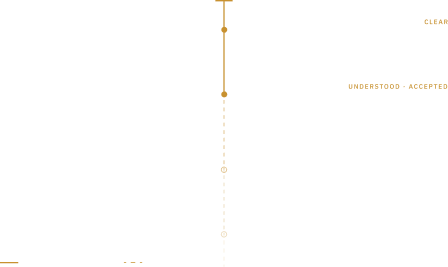
When the strategy was clear at the top and invisible at the bottom
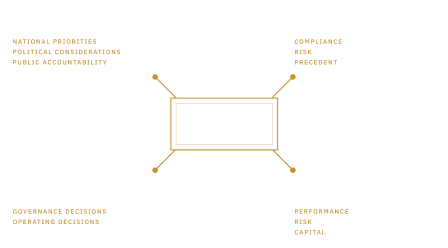
When every audiences requires a different signal.
Find out what your organization is actually hearing.
An executive conversation is 45 minutes. We look at one strategy you're currently trying to land, and where it's most likely being lost.

Request an Executive Conversation
A 45-minute call to look at one strategy you're currently trying to land, and where it's most likely getting lost.