
Where strategy stalls, and how it gets moving again.
Documented Signal Day engagements, and a weekly briefing on the patterns that keep showing up across them.
Executive insights


Case studies
Weekly insights for leaders who have to make strategy land.
The Origin of “Fearless Persistence”
Every title tells a story, even before a single page is written. It suggests what kind of conversation the reader is about to enter. When I began working on this project, I had no title, just a question that had followed me for decades: How do people keep going? I had seen so many gifted creators, artists, founders, teachers, leaders, step into their work with extraordinary vision, only to step away when the world pushed back. Some left because the industry changed; others because the cost felt too high. A few stayed. Those few always fascinated me. What made them different?
I started with words that circled the idea of endurance. Staying Power. The Long Arc. The Practice of Persistence. They were accurate, but they lacked vitality. They described something mechanical, almost grim, as though persistence were a kind of plodding through. The people I admired weren’t grim. They were luminous. Even when they faced setbacks, there was a lightness in their motion, a sense that their work was an extension of who they were. Persistence, for them, was grace, not grind.
Still, I kept testing language. I tried Courageous Continuance and The Art of Staying In. I liked the sound of Fearless Creation for a while, but it felt too one-sided, too easy to confuse with bravado. In truth, none of us are without fear. Every meaningful project brings risk, exposure, and doubt. The question isn’t whether fear exists; it’s whether we stay connected to purpose in its presence. That insight became the turning point. I realized I wasn’t writing about courage as the absence of fear, but about the capacity to continue despite it.
“Fearless” and “Persistence” finally came together during a conversation with one of my former students. We were talking about launching a new venture that, on paper, seemed almost impossible: too ambitious, too unconventional. I told her she needed persistence. She laughed and said, “I’m persistent, but I’m terrified.” I replied, “Then be fearless about your persistence.” The phrase landed with both of us at the same moment. I heard it and thought, That’s it. The two words balance each other. Fearless speaks to spirit; persistence speaks to practice. Together they describe what sustains creative lives over time.
When you examine the phrase closely, it’s not about aggression or perfection. “Fearless” doesn’t mean unafraid. It means you don’t let fear make your decisions. “Persistence” doesn’t mean endless motion. It means returning, steadily, to what matters most. Fearless persistence is a posture of steady, clear, resilient engagement. It is the act of staying connected to purpose even when outcomes are uncertain.
As the title began to settle, I tested it in conversation. The response was immediate. Artists nodded. Entrepreneurs nodded. Teachers nodded. The words seemed to belong to everyone who had ever chosen to keep going when stopping would have been easier. They understood instinctively that fearlessness is not about denial but about relationship: your relationship with the unknown, with failure, with yourself. And persistence is the quiet rhythm that carries you through it.
I also liked the way the title worked rhythmically. Two words, both strong, both universal. “Fearless Persistence” doesn’t promise transformation through luck or passion; it suggests transformation through steadiness. It sounds like something you can practice, not something you’re born with. That was important to me. I’ve always believed that creativity and leadership are learned behaviors. Talent matters, but structure and mindset sustain. The title had to reflect that: a human capacity anyone can cultivate.
Over time, the phrase began to teach me back. I found myself noticing moments of persistence in ordinary life: teachers who continued to show up for their students, community organizers who stayed at the table after the funding disappeared, families who rebuilt after losses. They weren’t fearless in the superhero sense. They were fearless in the human sense: they allowed fear to coexist with purpose. That balance creates sustainability. It’s what lets us do the long work without losing ourselves.
When people ask how I came to the title, I sometimes tell them it found me, not the other way around. Like most good creative choices, it emerged after many failed drafts, when I stopped trying to be clever and started listening to what the work was actually about. In every field I’ve worked in, film, business, education, the same pattern repeats: the people who succeed over time are those who return to their purpose, again and again, without letting fear or fatigue close the door.
The title reminds me daily that persistence is an art form and that fearlessness is its quiet companion. Together they form a discipline, one that holds us steady in uncertainty and keeps us connected to what matters most. Fearless Persistence is less a destination than a way of traveling. The willingness to stay, to continue, and to create meaning even when the path ahead is only partly visible.

How to Build a Creative Practice That Actually Lasts
The Renewable Attention Cycle
A creative life can stretch across decades. It can hold many careers, many mediums, many reinventions. Yet most people struggle to hold even one project without draining themselves. They treat attention like a resource that must be rationed, guarded, or forced into obedience. But attention is more alive than that. It responds to rhythm. It renews itself when given the right conditions.
The practice that endures comes from a renewable attention cycle. This cycle is shaped through micro-transitions, through presence, and through awareness of how your internal energy replenishes rather than depletes. I learned this through hard experience.
There was a period when I was writing my second book, Filmmaking in Action. Our deadline approached and most of the work had shifted onto my shoulders. Manuscript pages covered every table, desk, chair, and counter in our home. I was up late for weeks, revising and reworking. My attention narrowed into a tunnel. I pushed myself past the point of clarity. One night, the text literally blurred on the page. My eyes refused to focus. My mind was too exhausted to obey. I had to stop completely. That crash taught me a lesson I had ignored for too long. Endless focus collapses the very attention you depend on.
That collapse is the cost of working from depletion. Creativity becomes brittle. Ideas flatten. Decisions grow sluggish. You lose the ability to feel the work, which is the one thing the work needs from you most.
Years later, I built a different rhythm. My life now spans several domains. I produce films. I teach MBA students at Berkeley Haas. I lead programs in Berkeley Executive Education. I train leaders at major global companies. I publish two magazines. I mentor emerging artists and executives. The range is wide, but the rhythm is steady because it respects attention rather than abuses it.
One principle underlies everything: mornings are for generative work. That is when my mind is clearest and my energy strongest. I front load my days, protecting the morning hours for deep thinking and creative movement. Meetings and administrative tasks sit later. This pattern keeps my attention renewable because it aligns with how my mind naturally cycles.
But there is something more fundamental beneath that routine. The renewable attention cycle depends on micro-transitions. These are small shifts that last between ten seconds and three minutes. They reset your focus. They widen your awareness. They let the mind breathe. They turn sustained work into an unfolding rhythm rather than a punishing march.
A micro-transition can be simple. Standing up. A slow breath with your feet on the ground. Reading a sentence aloud. Looking away from the screen and letting your eyes adjust to a greater distance. These transitions seem trivial, but they create endurance. They prevent the collapse I experienced while writing that book. They keep the work alive.
Here is how to build the cycle.
Initiation
Every creative session begins by entering the work with a sense of presence. Start with something small and defined. A paragraph. A shot list. A question you are curious about. The mind resists heavy beginnings. It welcomes approachable openings. Initiation is about choosing the doorway that invites you inside.
Immersion
Once you begin, let yourself sink into the work without forcing intensity. Notice when your attention tightens. That is the signal to introduce a micro-transition. Many people mistake tightening for focus. Tightening is the early stage of depletion. It is the body whispering for a reset.
When I teach or coach, I tell students and executives the same thing. Presence is the foundation of any meaningful work. And presence comes from breath. Breathe to arrive where you are. Breathe to stay in the moment of creation. Breath anchors attention and allows it to flow rather than harden.
Renewal
Renewal happens when you complete something. Anything. A short unit of work offers a sense of progress that nourishes the mind. Completion keeps attention replenished. It outweighs the pressure of unfinished tasks. Without renewal, attention drains to zero and the work becomes heavier each time you return to it.
Small completions build internal momentum. They restore confidence. They remind your mind that movement exists even when the project is large.
Environment and Ritual
Ritual prepares attention. Environment supports it. Before I begin any significant work, I pause for one breath with intention. That breath marks the threshold between distraction and creation.
Your environment also teaches your attention how to behave. If your workspace is filled with unresolved decisions, your mind will chase them. If it feels open and steady, attention settles. This is not about perfection. It is about removing friction where you can.
Building the Long Arc
Creative longevity is not a trait people are born with. It is a rhythm they build. It is a relationship with attention that becomes more stable over time. When you honor micro-transitions, when you front load your day according to your natural energy, when you use breath to anchor your presence, you create a system your mind can trust.
Trust is what allows your attention to return tomorrow. And the next day. And the next.
You can sustain a creative life across decades. You can build multiple careers and support others on their journeys. You can expand your influence and your impact. All of that becomes possible when your attention renews itself instead of collapsing.
The renewable attention cycle is a simple idea. Yet it opens the door to a life of creative endurance. It allows your best work to emerge without asking you to sacrifice your health or your clarity.
Honor the cycle. Shape it deliberately. Let it carry you for years.
AI Won’t Replace You. It Will Mirror You
Every generation of creators confronts a new technology that seems poised to make them obsolete. The printing press threatened scribes, photography unsettled painters, and radio worried stage actors. Each time, the tool that inspired fear eventually became an extension of human imagination. Artificial intelligence continues that lineage. It will not replace us, but it will show us who we are.
AI functions as a mirror. It reflects patterns we’ve already made—our syntax, our aesthetics, our assumptions—and hands them back at high speed. When you use it, you are conversing with a distillation of collective human output. That can be exhilarating or unsettling. It’s exhilarating when the reflection reveals new connections. It’s unsettling when it exposes how predictable we have become. Either way, the mirror does not invent meaning; it amplifies what we give it.
For creatives, this moment is not about defending territory but redefining authorship. I tell artists and entrepreneurs to approach AI as a collaborator, not a competitor. Collaboration begins with clarity. The clearer you are about your purpose and sensibility, the more intelligently the tool can serve you. A vague prompt produces a vague reply. A precise mind creates precise outputs. The technology sharpens in proportion to your focus.
AI accelerates the need for authenticity. Because the machine can generate endless approximations of style, the only reliable differentiator is voice—your personal synthesis of experience, empathy, and worldview. When you use AI thoughtfully, it becomes an amplifier for that voice. When you use it carelessly, it multiplies imitation. The responsibility lies with the human, not the algorithm. What we build with these tools will mirror our collective character.
In my work with students and executives, I’ve seen AI provoke an unexpected kind of honesty. When people compare their own drafts to machine-generated versions, they recognize both their habits and their blind spots. The technology forces them to articulate what makes their work theirs. In this sense, AI is a new kind of teacher: relentless, fast, and incapable of flattery. It does not judge, but it reflects without mercy.
This mirror effect can make creative practice more disciplined. Writers learn to define their tone. Designers refine their visual grammar. Leaders clarify what truly requires a human touch—listening, mentoring, moral judgment. These are the elements no machine can simulate because they depend on consciousness. AI can suggest options; only humans can choose with intent.
The ethical challenge of AI is also a moral one. If we fill the digital world with haste, bias, and imitation, the systems will feed those qualities back to us. If we fill it with curiosity, generosity, and depth, the reflection will be richer. Technology has no conscience; culture gives it one. Each creator, each organization, is now partly responsible for training the mirror.
I do not believe AI heralds the end of creativity. It demands a new level of creative maturity. The more self-aware you are, the more powerfully you can use it. The less self-aware, the more easily you will be replaced by your own reflection. The goal is not to outsmart the machine but to outgrow the fear of it. To engage it as a tool that can extend your reach and illuminate your essence.
In the coming years, the most compelling work will come from people who treat technology as conversation, not competition. They will use the mirror to see more clearly, not to hide behind. AI will become part of the creative ecology, another instrument in the orchestra of human expression. The melody still begins with us.
The future belongs to those who know who they are and can teach their tools to reflect it. This is not the end of art or entrepreneurship. We now begin the next chapter in our ability to make meaning.
Resilience as a System, Not a Mood
The word resilience has become a cultural slogan. We tell people to “be resilient” the way we once told them to “be positive,” as though endurance were a personality trait one could summon by choice. Yet anyone who has lived through sustained uncertainty knows that resilience has little to do with mood. It’s a structure, not a feeling. It’s something you build so that when your energy and optimism collapse—as they inevitably will—you have a system strong enough to hold you until they return.
When I teach creative leaders and entrepreneurs, I see how easily they confuse persistence with stamina. They think they must push through every obstacle with force of will. But persistence isn’t about willpower; it’s about design. A resilient system anticipates that you will falter. It plans for recovery. In production, we build this idea into the schedule: contingency days, secondary suppliers, back-up plans. Yet when it comes to our personal and creative lives, we forget to do the same. We behave as if motivation will always be available on demand. It won’t be.
A resilient life rests on three interlocking pillars: structure, feedback, and connection. Structure provides rhythm. It turns aspiration into practice. When your schedule, environment, and habits are predictable, your imagination has space to roam freely. You can improvise safely because the frame holds you. Feedback offers calibration. It comes from mentors, collaborators, markets, and audiences—the mirrors that show you how your work lands in the world. Without feedback, you drift into self-deception. Connection supplies fuel. No one persists in isolation. We draw strength from peers who understand the difficulty of creative work, who remind us that struggle is normal, not evidence of failure.
These pillars create a system that sustains creative lives over decades. I’ve seen filmmakers, executives, and artists survive brutal setbacks because they had designed environments that protected their focus. They built repeatable rituals: writing each morning, exercising at the same hour, keeping a short list of trusted readers or advisors. When chaos arrived—as it always does—they didn’t need to summon bravery. They simply returned to the system that steadied them.
Resilience also depends on periods of deliberate pause. I sometimes tell students to schedule recovery as seriously as deadlines. You can’t sprint endlessly. Even machines require maintenance; even orchestras have rests. The pause is not wasted time—it is the space where insight re-forms. During recovery, your subconscious repairs what exhaustion has fractured. Creativity often returns not when you push harder, but when you step away long enough to see clearly again.
When leaders build organizations without recovery, they create cultures of brittle efficiency. When artists neglect recovery, they lose curiosity. Both lead to burnout disguised as productivity. The illusion of resilience—constant motion, constant output—eventually destroys the very capacity for invention that success depends on.
To make resilience systemic, you must treat it as part of your operational model. Ask: What supports my persistence when enthusiasm disappears? Create processes that answer that question. Automate small decisions. Protect quiet time. Invest in relationships that reflect your best self back to you. Remember that sustainability is cumulative: daily patterns, not heroic bursts, determine longevity.
True resilience looks almost boring from the outside. It’s disciplined, rhythmic, repeatable. But inside, it produces freedom—the kind that lets you take creative risks because you know the foundation will hold. That is the paradox of sustainable work: the more structured your system, the more spontaneous your ideas can become. Over time, resilience stops being a reaction to crisis and becomes a state of readiness. You no longer have to find your footing each time the ground shifts; your system keeps you upright.
The world will continue to deliver volatility. Markets, technologies, and attention spans will keep changing. But when resilience is built into your design, you no longer fear the disruption. You expect it, absorb it, and transform it into motion. That is not mood. That is mastery.
Yes, Hope Is a Strategy
“Hope is not a strategy.” That phrase, attributed to General Gordon R. Sullivan, has been passed around boardrooms and business schools for decades. It’s usually said with a shrug, a knowing smile, and an implied lesson: that serious people make plans, not wishes. When I mention it in my classes at the Haas School of Business, I see my MBA students nod. They’ve heard it from venture capital mentors or read it in startup blogs. Hope, in their training, belongs to the realm of naïveté.
I understand why the phrase endures. Hope, on its surface, looks like soft thinking. It can seem vague, emotional, even unmeasurable—the opposite of what a spreadsheet or a pitch deck demands. But the longer I’ve worked with entrepreneurs and creatives, the clearer it’s become to me that the people who build lasting ventures and meaningful work all rely on hope. They just don’t call it that. They call it vision, resilience, faith in the process. Whatever the name, hope is the fuel that keeps them iterating when the metrics lag behind the mission.
Every entrepreneur begins with hope. There is no data for what has never been done before. There are only projections, prototypes, and imagination. If you strip hope away from innovation, all you have left is replication—businesses that repeat what already exists. Hope is the origin point of strategy because it is the one resource that allows you to imagine a future different from the present. Without it, you cannot lead, only manage.
I tell my students that hope, when practiced properly, is operational. It functions like a renewable energy source. You begin with a sense of possibility, translate that into goals, and test it through disciplined experimentation. Hope directs the creative impulse toward measurable results. The best founders, artists, and leaders do not merely feel hopeful; they work their hope. They turn aspiration into design, into hiring plans, into prototypes and proofs of concept. Hope is the reason they’re willing to keep showing up when logic says they shouldn’t.
When I work with startup teams, I can tell within minutes whether hope is alive in the room. You can hear it in the way people talk about their customers. A hopeful team stays curious; a hopeless one defends. Hopeful teams ask, “What might we learn next?” Hopeless teams say, “That’s not in the budget.” One lives in growth, the other in survival. The irony is that the hopeful team, though riskier on paper, is often the one that endures. They make better decisions because they can still imagine success.
In creative industries, hope is no less vital. Every artist, musician, or writer begins a project with no guarantee that it will find an audience. The act of creation itself is a form of hope: a declaration that the work will connect, that it will mean something to someone else. I’ve seen what happens when that hope collapses. The work becomes mechanical. People stop experimenting. They start repeating the safest version of themselves, and their art flattens into product.
Hope is also inseparable from sustainability. A creative life—or any life built on self-directed work—demands durability. You must pace your energy, plan your resources, and protect your time. Hope without structure burns out. Structure without hope ossifies. The two together form a stable system. That’s the secret of long careers in art, entrepreneurship, or leadership: people learn to operationalize hope. They convert belief into daily rhythm.
When my MBA students present their final projects, I always listen for the tone beneath the numbers. Some teams deliver immaculate spreadsheets and bulletproof forecasts, yet I know they won’t last a year because I can’t feel their conviction. Others stand there with half-finished prototypes, still refining, still discovering, and I can sense their trajectory: They believe in what they’re building. That belief isn’t irrational; it’s disciplined hope. It’s what allows them to persist long enough to get the data the skeptics demanded at the start.
Hope is a strategy because it aligns imagination with effort. It gives people permission to continue, and it keeps systems human. Without hope, leadership becomes management of decline. With it, leadership becomes stewardship of possibility. Every innovation, from a startup to a symphony, begins as an act of hope backed by skill and persistence.
The old military aphorism meant well. In combat, hope alone can be fatal. But in creativity and entrepreneurship, hope is essential. It’s not the substitute for strategy; it’s the seed from which all strategy grows. As I tell my students, if you don’t have hope, you don’t have a venture—you have an algorithm. And no algorithm, no matter how optimized, has ever imagined a future worth living in.
How Signal Day works, in practice.
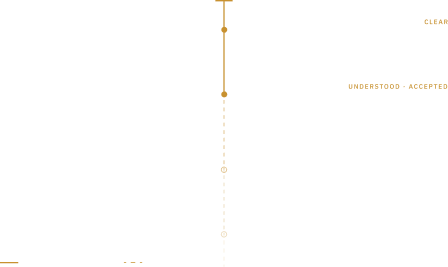
When the strategy was clear at the top and invisible at the bottom
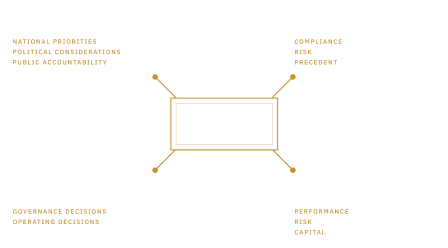
When every audiences requires a different signal.
Find out what your organization is actually hearing.
An executive conversation is 45 minutes. We look at one strategy you're currently trying to land, and where it's most likely being lost.

Request an Executive Conversation
A 45-minute call to look at one strategy you're currently trying to land, and where it's most likely getting lost.