
When the strategy was clear at the top and invisible at the bottom.
Fortune 500 technology company; manufacturer of components essential to AI computing and defense infrastructure.
The strategy was right, but it stopped moving downwards.
A Fortune 500 technology company had adopted a strategy to accelerate manufacturing output. The company supplied components essential to both AI computing infrastructure and defense, two sectors in which demand, competition, and geopolitical pressure were all increasing rapidly.
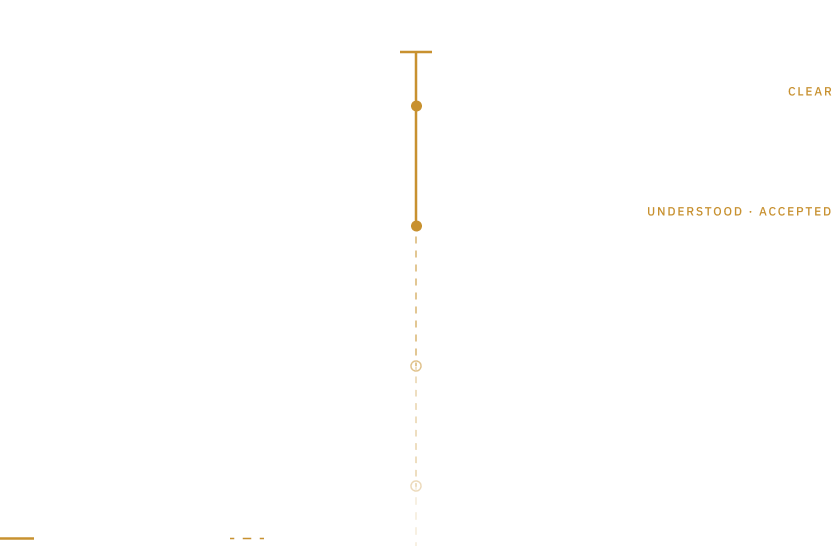
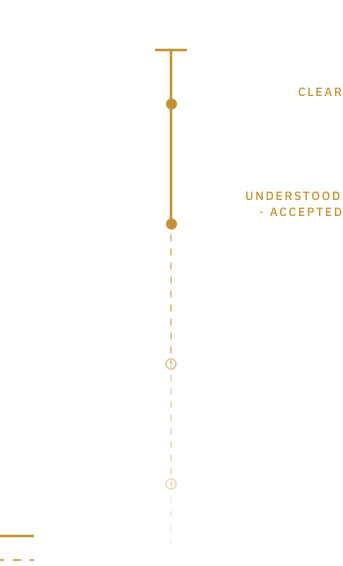
At the C-suite level, the strategy was clear. The next level of senior management understood it and had accepted it. But acceleration was not happening. Targets were being missed, and senior leadership could not see where the strategy was getting stuck.
Twenty-five leaders, working from actual examples.
In conversations with senior executives before the leadership session, the underlying problem began to come into focus.
The strategy had been understood by the people who created it, but it had not traveled successfully through all the internal and external layers responsible for carrying it out. People further into the organization did not always know what the strategy meant for their own decisions, priorities, authority, or behavior.
During the session, approximately twenty-five senior leaders examined specific points where information and intent had failed to move through the organization. As they worked through actual examples, a larger pattern became visible.
Several communication breakdowns emerged that had never been clearly identified or documented. Some were directly connected to the manufacturing initiative. Others revealed broader structural issues in how strategy moved through the company.
THE CENTRAL FINDING
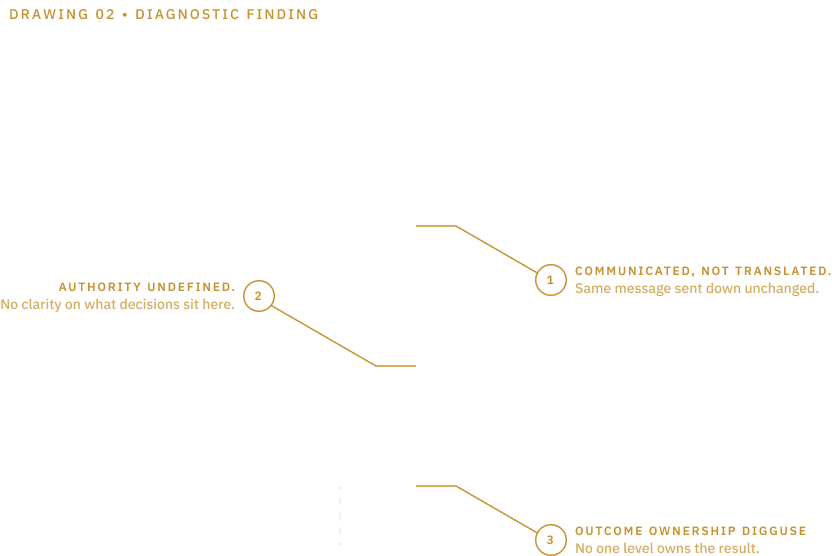
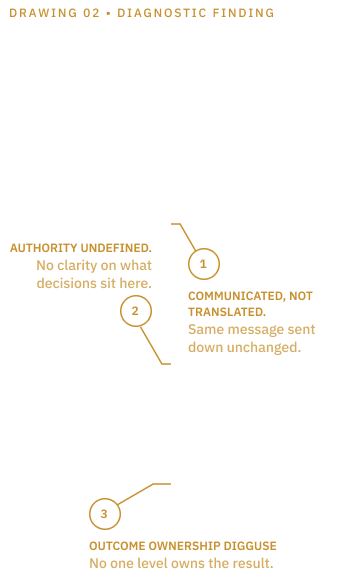
The company had communicated the strategy from the perspective of senior leadership, but had not sufficiently translated it for the people who had to execute it.
Different levels of the organization needed different information. They also needed clarity about what decisions they could make, what outcomes they owned, and how their work connected to the larger objective.
Mapping the path the strategy had to travel.
The leadership team mapped the path the strategy had to travel, from the C-suite through management, operating teams, and key external partners.
They examined how the message needed to change as it moved from one audience to another. They identified places where authority had become unclear, where accountability was diffuse, and where people were being asked to execute without enough context to make good decisions.
From that work, the group built a clearer architecture for carrying strategy through the organization. People at each level would receive enough context to understand the objective, enough authority to act within their responsibilities, and enough clarity to know what outcome they owned.
WHAT THE WORK WAS FOR
The objective was to create ownership throughout the system.
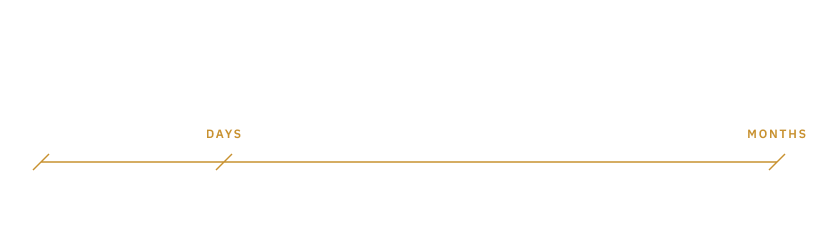
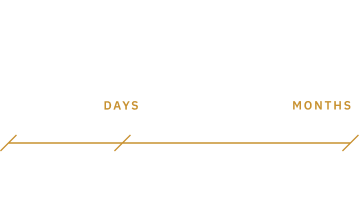
Ninety days to movement, six months to target.
WHAT THIS ENGAGEMENT ADDRESSED

Request an Executive Conversation
A 45-minute call to look at one strategy you're currently trying to land, and where it's most likely getting lost.